
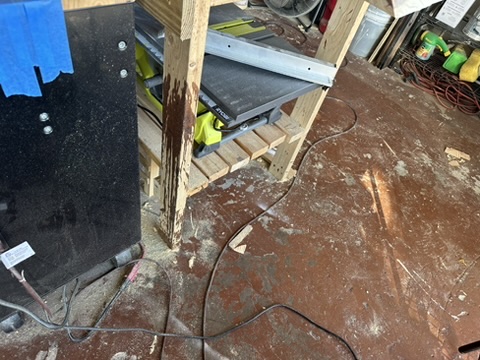
I spilled a quart of wood stain last week
.
Not a little splash – a quart. All over the garage floor.
I’m a clumsy girl. For a while, I tried really hard to be more careful… constantly watching where I put things, moving slower, triple-checking everything. But it made me so anxious, I was always worried about what I was going to break next. So I decided let go and stop caring so much. I like to think it makes me have a really healthy nonattachment to things!
So there I was in the garage while my boyfriend was staining a coffee table he’s building for us. I thought I was helping by moving the can of stain closer to him. Except I didn’t notice I was setting it on a power cord, and it fell right off the bench and coated the floor immediately.
My boyfriend just did a big inhale as he watched it happen. And kept staining. And then he started laughing about how it was “typical Atira.” And I cleaned it up.
That was it. No yelling. No lecture. No “are you fucking kidding me” Just… back to work. And a laugh.
It made me really grateful for him.
Think about it for a second. When your partner makes a mistake – spills something, forgets something important, screws something up – how do you react? Are you understanding? Patient? Do you help them fix it and move on?
If you’re a parent, how do you respond when your kid accidentally breaks something or makes a mess?
And here’s the most important question: How do you treat yourself when you make a mistake?
When I have a client who comes in with ruminating thoughts, they almost always have some blend of guilt or shame at the center. They replay their mistakes over and over. They call themselves names they’d never call anyone else. They hold themselves to standards they’d never hold another human being to.
Here’s what I’ve learned from working with clients: Guilt doesn’t actually help you learn from your mistakes. It keeps you stuck in them.
I know – that might sound counterintuitive. A lot of us were taught that feeling bad about our mistakes is what prevents us from making them again. That the shame is somehow… useful.
But think about it. When you’re replaying a mistake over and over – cringing about it in the shower, losing sleep over it at 2am – are you actually learning anything new? Or are you just reliving the same moment on a loop, feeling worse each time?
Here’s what guilt actually does: it keeps you so focused on how bad you feel that you never get to the part where you grow from it. You can’t learn when you’re in a shame spiral. Your brain is too busy attacking itself to do anything productive.
And here’s the real kicker: when you believe you’re bad, you tend to do more “bad” things. Shame doesn’t make you more careful – it makes you more anxious. And anxious people make more mistakes, not fewer.
The moment I knocked over that can of stain, I already knew I should’ve looked where I was setting it. That’s all the feedback I needed. Lesson learned.
That momentary “oops” is enough. You don’t need hours of self-criticism on top of it.
So what’s the alternative? You make a mistake. You notice it. You understand what you’d do differently. And then – here’s the wild part – you let yourself move on.
Not because the mistake didn’t matter. But because beating yourself up about it was never going to make you better. It was only ever going to keep you stuck.
You’re a human being who makes mistakes. That’s not a character flaw – that’s just being human.